
Good Debt vs Bad Debt: How to Tell the Difference
Not all debt is created equal. Some builds your future, some just drains it. Here is how to tell good debt from bad, plus the reality that context matters more than the label.


Good debt generally helps you build something, an asset, a skill, income, or equity, and comes with a low interest rate. Bad debt usually funds things that lose value or get consumed, and it tends to carry a high interest rate. A mortgage or a student loan is the classic good debt. A credit card balance or a payday loan is the classic bad debt. The two questions that sort almost any debt: what did the money buy, and how much does the debt cost?
That said, the labels are a starting point, not a verdict. Context matters more than the category, and some of the most “bad” debt on paper is exactly the right call in real life. More on that in a minute.
The two questions that sort any debt
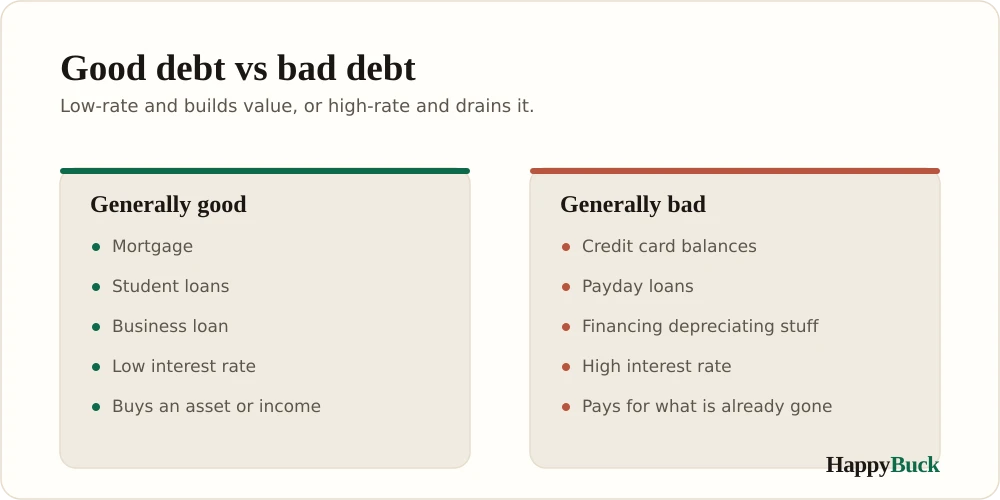
| Generally good debt | Generally bad debt | |
|---|---|---|
| What it buys | An asset or income (home, education, business) | Things that lose value or are consumed |
| Interest rate | Low | High |
| Over time | Builds equity or earning power | Drains money with nothing to show |
| Examples | Mortgage, student loans, business loan | Credit cards, payday loans, financing depreciating stuff |
Good debt is an investment. A mortgage buys an asset that tends to hold value while you build equity. Student loans buy earning power. A business loan can buy income. The rate is low, and the thing you bought is still working for you.
Bad debt is the opposite. It is expensive, and it usually pays for something that is already gone, last month’s dinners, a depreciating gadget, a vacation you financed. You are still paying, at a high rate, for value that has evaporated.
Context beats the label
Here is where the neat categories break down, and it matters. Sometimes “bad” debt is the right choice, and calling it a mistake would be both wrong and cruel.
My wife adopted a dog before we met. Early on, that dog needed serious, expensive medical work, and she did what a lot of us would do: she maxed out credit cards to pay for it and save her life. On a spreadsheet, that is textbook bad debt, high-rate, funding a non-appreciating “expense.” In reality, it was one of the best decisions she ever made. That dog is still with us, and she is my best friend. She carried that debt for a while and paid it down over time, and it was worth every cent.
The lesson is not that high-interest debt is fine. It is that “good” and “bad” describe the cost and the use of debt, not whether taking it on was the right human decision. A high-rate emergency debt is still expensive, so you pay it off as fast as you can, but do not let anyone shame you for a choice that mattered.
How to use this in real life
- Avoid bad debt when you have the choice. Do not finance depreciating stuff or carry credit card balances for things you consumed.
- Be cautious even with good debt. A mortgage or student loan turns bad if you borrow more than you can carry. The category helps, but the amount still has to make sense.
- When you must take on bad debt, treat it as urgent. Cover the true emergency, then attack the balance with a real payoff plan.
Dig deeper
Carrying the expensive kind? See how to pay off credit card debt, build the cushion that prevents emergency debt with emergency fund basics, or work through the full plan to get out of debt, whatever kind you have.
Good debt builds your future, bad debt drains it, and the interest rate plus what the money bought will tell you which is which almost every time. But keep the human context in view. The goal is not a perfect record, it is using debt on purpose, cheaply when you can, and paying off the expensive stuff fast when life makes the call for you.
Frequently asked questions
What is the difference between good debt and bad debt?
Good debt generally helps you build wealth or income over time and comes with a low interest rate, like a mortgage, a student loan, or a business loan. Bad debt usually funds things that lose value or that you consume quickly, and it often carries a high interest rate, like credit card balances, payday loans, and financing depreciating purchases. The rate and what the money buys are the two biggest clues.
Is a mortgage good debt?
Usually, yes. A mortgage is typically low-interest, it buys an asset that often holds or grows in value, and it builds equity you own over time. It can still become bad debt if you borrow more house than you can afford, but as a category, a reasonable mortgage is the classic example of good debt.
Are credit cards always bad debt?
Credit cards themselves are just a tool. Using one and paying it off in full every month is not debt at all, and it earns rewards and builds credit. Credit card debt, meaning a balance you carry at 20-plus percent interest, is the textbook example of bad debt because it is expensive and usually funds things that are already gone.
Can bad debt ever be the right choice?
Yes. Sometimes high-interest debt is the only way to cover a genuine emergency, like an urgent medical bill for a person or a pet. That does not make it cheap, but it can absolutely make it the right call. Good and bad describe the cost and the use, not whether taking it on was wise in your situation.


