
How to Stop Living Paycheck to Paycheck (7 Realistic Steps)
A realistic plan to break the cycle: why a missing buffer keeps you stuck, and the seven steps that get you a month ahead of your bills for good.


Living paycheck to paycheck means your income is spent almost as fast as it arrives, with little or nothing left over before the next payday. Breaking the cycle comes down to a short, realistic plan: track where your money actually goes, cover your essentials first, automate a small emergency fund so surprises stop becoming debt, knock out high-interest balances, and then widen the gap between what you earn and what you spend. You will not fix it in a week, but most people feel real relief within a few months.
The first time I clawed my way out of this, the problem was not what I expected. I sat down and put every expense into a spreadsheet, and the thing bleeding me dry was not rent or gas. It was a stack of subscriptions I had forgotten about and barely used. Just from seeing it laid out, I found over $100 a month I could take back with changes that barely stung. That did not make me rich, but it was the first time in a while that a month ended with something left over instead of nothing.
Why you are actually stuck
For a lot of people, the real problem is not income. It is the missing buffer. When you have zero cushion, every unexpected cost, a car repair, a medical copay, a slow month, goes straight onto a credit card. Then the minimum payment eats into next month’s paycheck, which leaves you even thinner, so the next surprise goes on the card too. That is the cycle, and it is a timing and buffer problem as much as an income one.
Break it in one spot, a small pile of savings that absorbs the next surprise, and the whole loop starts to loosen.
How to stop living paycheck to paycheck
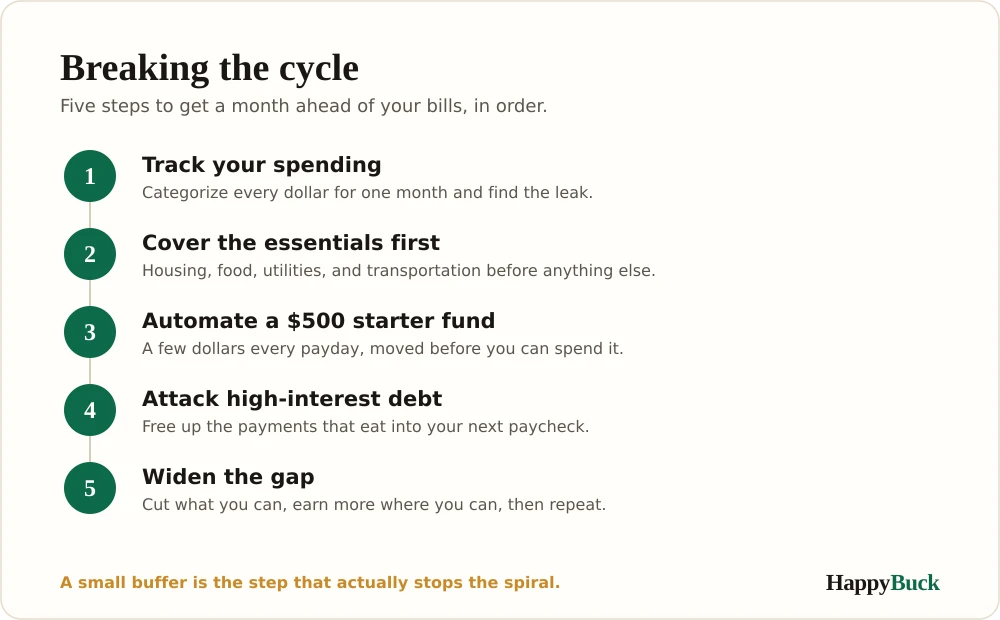
- Track your spending for one month. You cannot fix what you cannot see. Write down or categorize every dollar for 30 days. Almost everyone finds a leak they did not know about.
- Cover the essentials first. Housing, food, utilities, and transportation come before anything else. Build your budget around those four, using the 50/30/20 rule or a zero-based budget as the frame.
- Find quick wins to free up cash. Cancel the subscriptions you do not use, trim the ones you do, and pause anything that is not essential. This is where the fastest money usually hides.
- Automate a small starter emergency fund. Not three months of expenses, just $500 to start. Set up an automatic transfer of a few dollars every payday into a separate high-yield savings account so it happens before you can spend it. This is the pay yourself first idea in miniature, and this one step is what actually breaks the cycle.
- Stop taking on new debt. No new balances, no buy-now-pay-later at checkout. You cannot dig out while you are still digging in.
- Attack high-interest debt. Once the starter fund is in place, throw every extra dollar at your highest-interest balance. Here is how to pay down high-interest debt.
- Widen the gap. Budgeting can only cut so far. The other side is earning more, whether that is a raise, more hours, or a side hustle. A bigger gap between income and spending is what makes the change permanent.
How long it takes
This is a few-months project, not a weekend one. Most people who commit to small, consistent changes feel meaningfully different within three to six months. You will have a starter cushion, your debts will start shrinking, and you will feel a level of control you did not have before. Getting fully a month ahead of your bills, so you are spending last month’s income instead of this one’s, takes longer, but the day-to-day stress eases long before then.
The honest part
Sometimes it really is an income problem. If you track everything, cut to the bone, and your essentials still do not fit inside your take-home, no budgeting trick is going to close that gap on its own. That is not a discipline failure, it is a math reality, and the honest fix is raising income or lowering a fixed cost like housing, not squeezing a budget that is already empty. If you are in that spot, a side hustle or a push for more hours will move the needle far more than another spreadsheet. And if things are genuinely tight, there is no shame in using assistance programs while you get your footing.
Where to go next
- Pick a budgeting method that fits you: 50/30/20 vs zero-based vs envelope.
- Build the emergency fund that absorbs the next surprise.
- Plan for the irregular bills so they stop ambushing you, with sinking funds.
- Ready to earn more? Browse side hustles and how to pay down debt.
Living paycheck to paycheck is exhausting, but it is not permanent. Get a small buffer in place, cover the essentials, cut what you can, and widen the gap however you can. The first month you end with money left over is the one where it starts to feel possible. For free, no-hype budgeting worksheets to start from, the Consumer Financial Protection Bureau has solid versions.
Frequently asked questions
Why do I live paycheck to paycheck?
Usually it is one of two things. Either your spending has crept up to match your income so there is nothing left to save, or you have no buffer, so every surprise expense becomes debt whose payments eat into the next paycheck. Sometimes it is a genuine income problem, where even a lean budget does not fit your take-home. Tracking your spending for a month is the fastest way to tell which one you are dealing with.
How do I stop living paycheck to paycheck on a low income?
Start smaller than the usual advice suggests. Aim for a starter emergency fund of just \$500, saved a few dollars per paycheck and automated so you never see it. Cover your essentials first, cut the expenses that are easiest to lose, and pause any new debt. If your essentials genuinely do not fit your income, the lever that matters most is raising income, through a raise, more hours, or a side hustle.
Should I save or pay off debt first?
Save a small starter emergency fund first, around \$500 to \$1,000, then focus on high-interest debt. Without any cushion, the next unexpected bill goes straight back onto a credit card and undoes your progress. Once the starter fund is in place, throw everything extra at your highest-interest balances.
How long does it take to stop living paycheck to paycheck?
Most people who make consistent small changes feel a real difference within three to six months: a small savings cushion, debts starting to shrink, and a sense of control. Getting fully a month ahead of your bills takes longer, but the stress drops well before you reach that point.


