
How to Pay Off Student Loans (A Practical Plan)
Student loans are usually low-rate, which changes the strategy. Here is how to pay them off smartly, why crushing them fast is not always the right move, and the one rule that is.


To pay off student loans wisely, start by knowing exactly what you owe and at what rate, pick the repayment plan that fits your budget, and never miss a payment. Then decide how aggressively to pay based on the interest rate: student loans are often low-rate, so throwing every spare dollar at them is not always the smartest move if you are carrying high-interest debt or have no emergency fund. The one rule that never changes is to always make at least the minimum, on time, every month.
The biggest lever with student debt actually happens before you borrow, in how much you take on. But if you already have loans, this is the practical plan for clearing them without wrecking the rest of your finances.
The best student loan decision is the one before the loan
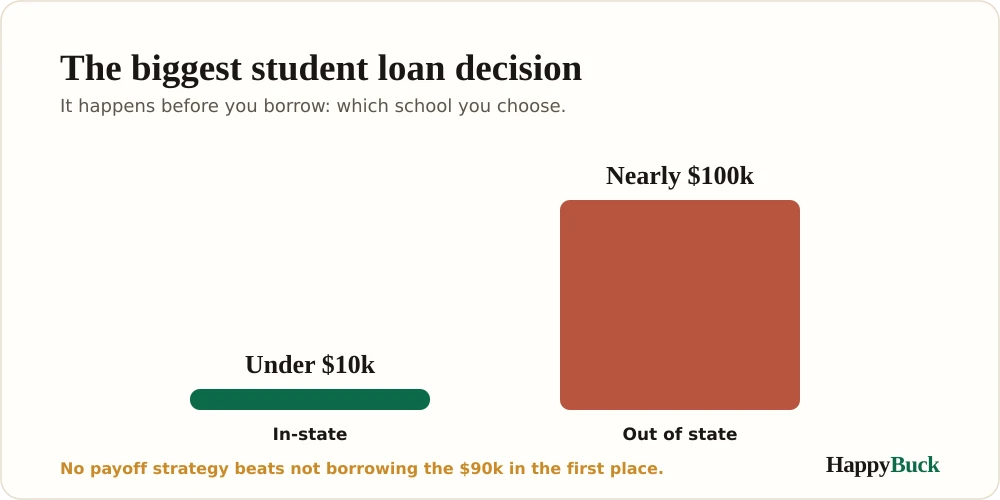
Here is the decision that mattered most for me, and it happened before I borrowed a cent. When I was choosing colleges, my parents sat me down and broke down the actual debt I would carry after graduation for each option. In-state, I would finish with under $10,000. Out of state, closer to $100,000. Written out like that, it was not really a choice. I went in-state, graduated with a small, manageable balance, and started adult life without a mortgage-sized loan hanging over me.
If you are still choosing a school, or advising someone who is, run that math first. Scholarships, in-state tuition, and community-college-then-transfer can be the difference between a loan you barely notice and one that shapes your twenties. No payoff strategy beats not borrowing the $90,000 in the first place.
If you already have loans, here is the plan
- Inventory every loan. Federal and private, the balance, the interest rate, the minimum, and the servicer. You cannot plan around numbers you are avoiding.
- Pick the right repayment plan. Federal loans offer options like standard and income-driven repayment. A lower payment buys breathing room; a higher one clears the debt faster. Choose what your budget can actually sustain.
- Decide how aggressive to be, by rate. This is the key call. If your rate is low, paying the minimum while you build an emergency fund, capture any 401k match, and kill high-rate debt often builds more wealth than overpaying the loan. If your rate is high, treat it more like credit card debt and attack it.
- Target private and high-rate loans first. They usually cost more and protect you less. Federal loans are often worth keeping on schedule for their lower rates and protections.
- Consider refinancing carefully. Refinancing can lower a high rate, but refinancing federal loans into a private loan gives up federal protections and forgiveness options for good. Weigh that trade before you do it.
Why I was in no rush to pay mine off
I did not race to pay off my student loans, and that was on purpose. My rate was low, so crushing a cheap loan while I had better uses for the money, building savings, capturing retirement matches, avoiding any high-rate debt, would not have made sense. Paying it steadily every month also helped my credit history at a time when I did not have much other credit. That is not “carry debt for the credit score,” which is a myth. It is simpler: a low-rate loan is a low priority to overpay, and paying it reliably on time is good for your credit either way.
My wife took a similar path. Neither of us had huge balances, thanks to scholarships and smart school choices, but we both treated the monthly payment as non-negotiable.
The one rule: never miss a payment
Whatever you decide about paying fast or slow, protect the minimum payment like a utility bill. Student loans get dangerous when you miss, because late payments stack up fees, hurt your credit, and can spiral toward default. It is a vicious cycle: miss a month or two and catching up gets harder fast. My wife and I always made sure the payment was covered first, before anything optional. If you truly cannot make a payment, call your servicer about deferment, forbearance, or an income-driven plan before the due date, not after.
Where to go next
- Higher-rate debt should usually go first: how to pay off credit card debt.
- Should you pay loans or save first? Here is the order.
- Free up money to pay faster with a budget and by lowering your bills.
Student loans are usually the least urgent debt you carry, which is exactly why the smart play is to pay them reliably, not frantically, while your money does more important work elsewhere. Know your loans, protect the minimum, and be aggressive only when the rate earns it. For the authoritative details on federal loans and repayment options, studentaid.gov is the official source.
Frequently asked questions
What is the best way to pay off student loans?
Know exactly what you owe and at what rate, pick the repayment plan that fits your budget, and always pay at least the minimum on time. Because student loan rates are often low, aggressively overpaying them is not always the best use of money if you have higher-rate debt or no emergency fund. Attack high-interest debt and build a cushion first, then decide how fast to clear the loans.
Should I pay off student loans early or invest?
It depends on the interest rate. If your student loan rate is low, you may build more wealth by investing (especially in a 401k match) and paying the loans on schedule. If the rate is high, paying them down faster is the safer guaranteed return. Compare your loan rate to what you could reasonably earn elsewhere.
What happens if I miss a student loan payment?
Missing payments is where student loans get dangerous. Late payments trigger fees, can hurt your credit, and, if you fall far enough behind, can lead to default with serious consequences. Always cover at least the minimum. If you cannot, contact your servicer about deferment, forbearance, or an income-driven plan before you miss.
Are federal or private student loans better to pay off first?
Compare interest rates, but as a rule, private loans are often higher-rate and have fewer protections, so they are usually the better target to pay off first. Federal loans tend to be lower-rate and come with options like income-driven repayment and potential forgiveness, so it is often worth keeping them on schedule while you attack pricier debt.


