
How to Save Money on Groceries (Without Eating Worse)
You can cut your grocery bill without clipping a single coupon. Here are the tactics that actually move the number, from meal planning to store brands to wasting less.


You can meaningfully cut your grocery bill without couponing all weekend or eating worse. The biggest wins come from a short list of habits: plan meals around what you already have, shop with a list, buy store brands, compare unit prices, and waste less of what you buy. Food is one of the largest and most flexible parts of most budgets, which makes it one of the best places to save, and most of the savings come from planning, not deprivation.
The two things quietly inflating your grocery bill are almost always impulse buys and food waste. Fix those two and the number drops on its own, before you cut a single thing you actually eat.
The tactics that actually move the number
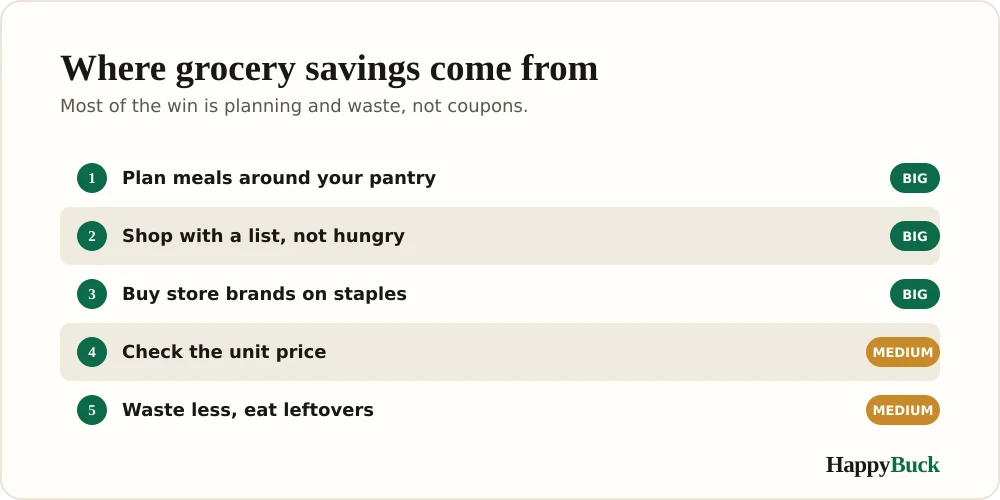
| Tactic | Why it works | Rough impact |
|---|---|---|
| Meal plan around your pantry | Turns your list into what you will actually cook, cutting waste and impulse buys | Big |
| Shop with a list (and not hungry) | Fewer unplanned grabs, which are where budgets leak | Big |
| Buy store brands | Same product, no ad budget, usually 20 to 30% cheaper | Big |
| Compare unit prices | The shelf price lies; price per ounce tells the truth | Medium |
| Buy seasonal produce | In-season fruit and veg is cheaper and better | Medium |
| Use what you buy | Leftovers and pantry-first cooking cut waste directly | Medium |
Plan around what you already have
Before you write a shopping list, look in your fridge, freezer, and pantry. Most households are quietly sitting on a week of half-used ingredients. Build a couple of meals around those first, then fill in the gaps. This one habit attacks both waste and overbuying at once, which is why it is the highest-leverage grocery move there is. Keep the plan realistic, too. Planning to roast a whole squash on a busy Tuesday is how good intentions become garbage-can produce.
Shop smarter in the store
- Bring a list and stick to it. The list is the plan. Everything off-list is where the budget leaks.
- Do not shop hungry. It is a cliche because it is true. A snack before you go saves real money.
- Check the unit price, not the sticker price. The bigger package is not always cheaper, and the tag usually shows price per ounce if you look.
- Reach past eye level. Stores put the pricier brands where your eyes land. Cheaper options are often higher or lower on the shelf.
- Try store brands on staples. Start with things where brand barely matters, like flour, rice, canned goods, and cleaning supplies.
Waste less of what you buy
Roughly a third of household food gets thrown away, which is money straight in the trash. Cook what you bought, eat your leftovers (turn roasted veggies into an omelet, grilled chicken into quesadillas), and freeze what you will not get to in time. Wasting less is the rare grocery tactic that costs nothing and requires no willpower at the store.
Here is what actually worked for me: meal prepping at the start of the week. I happen to be fine eating the same thing every day, which makes it easier, but the real win was that it showed me exactly what I was spending on food. It paired perfectly with tracking my calories and macros for the gym, and it killed my waste. I stopped buying the extra fruit and vegetables that used to rot in the drawer, because I only bought what I was going to cook all at once. Less waste, a smaller bill, and I never had to wonder what was for dinner.
A quick word on apps and coupons
Cash-back apps and loyalty programs can add a little on top, and they are worth a few minutes if you enjoy them. But treat them as the last 5 percent, not the strategy. Chasing coupons can even cost you money if it nudges you to buy things you would not have. The real savings are in planning, store brands, and waste, not in a folder of clippings.
Where to go next
- Groceries are one big lever. Here are the other big recurring costs to cut.
- Tight budget? See how to save money on a low income.
- Trim the fixed stuff too: how to lower your monthly bills.
- Not sure where your food money goes? Start by tracking your spending.
Saving on groceries is not about eating beans by candlelight. It is about buying what you will actually eat, choosing the cheaper version when it does not matter, and throwing less away. Do that, and the bill comes down while your meals stay exactly as good. For unbiased guidance on food budgeting, the USDA’s monthly food plans show realistic spending targets by household.
Frequently asked questions
What is the best way to save money on groceries?
The single most effective habit is meal planning around what you already have, then shopping with a list. It cuts impulse buys and food waste at the same time, which are the two biggest sources of a bloated grocery bill. Store brands and comparing unit prices come next.
How much can you save with store brands?
Store brands typically cost 20 to 30 percent less than name brands for similar or identical products, since you are not paying for national advertising. Swapping to generics on staples you buy every week can save a family hundreds of dollars a year with no real drop in quality.
Does meal planning actually save money?
Yes, and it is usually the biggest lever. A meal plan turns your shopping list into exactly what you will cook, so less food gets bought on impulse and less rots in the fridge. Building the plan around what is already in your pantry and freezer stretches it further.
When is the best time to grocery shop for deals?
Mid-week, often Wednesday or early Thursday, tends to line up with new sale cycles, restocks, and markdowns on produce, bakery, and meat. Shopping after a meal rather than hungry also cuts impulse buys.


